Sports
Air Invictus is here! Get prepared for a High-Octane Motorsport Weekend

For three days, from 19 to 21 June 2026, the sky ceased to be merely the space through which aircraft arrive at and depart from Francisco Sá Carneiro Airport. At Air Invictus, it became a stage, a race track, a canvas for thousands of points of light and a meeting place for pilots, military personnel, families, aviation enthusiasts and curious spectators.
The first edition of Air Invictus spread across five municipalities (Porto, Vila Nova de Gaia, Maia, Matosinhos and, through some initiatives, Espinho) with an ambitious goal: to turn aviation into an event that reached far beyond the community of people who already know and follow aircraft. There were historic and competition aircraft, military jets, exhibitions, educational activities, music, model aircraft, drones, racing and aerobatic displays. At the centre of it all was the Douro, transformed for a weekend into a natural racetrack for flying machines.
The organisers estimated that around one million people attended the festival across its different locations. Before the event, the target had been to attract one million visitors and generate an economic impact of more than €100 million.
But to understand Air Invictus, it is worth starting away from the Douro.
In Maia, the Municipal Aerodrome of Vilar de Luz became the event’s centre of gravity on the ground. If the Douro provided the most spectacular backdrop, the aerodrome was where visitors could stop, look closely and understand aviation without the usual distance imposed by an air show.
Over the three days, the Expo Air Invictus presented around 40 civilian and military aircraft. The collection included competition and aerobatic aircraft, military planes and historic examples, including Warbirds associated with the history of 20th-century military aviation. The programme also brought together pilots, autograph sessions, model aircraft demonstrations, food and exhibition areas, and activities aimed at different audiences.
Friday began, unusually for an event of this scale, with a focus on younger visitors. Between 9am and noon, the exhibition was reserved for schools as part of the “Your Wings Start Here” programme, offering aviation and aerospace education and direct contact with aircraft, pilots and organisations from the sector. From midday onwards, the site opened to the general public, free of charge.
It was an important contrast with what would follow over the Douro. At the aerodrome, visitors could get close to the machines, examine the shape of their wings, the rivets, engines and instruments, and appreciate the physical scale of an aircraft. They could also meet the pilots who, only hours or days later, would be seen travelling at much higher speeds above the river.
Among the aircraft on display were EDGE and EXTRA aerobatic models, machines specifically designed to withstand the extreme demands of aerobatic flying. The Portuguese Air Force was also present with several aircraft, combining static displays, demonstrations and opportunities for the public to engage with its personnel.
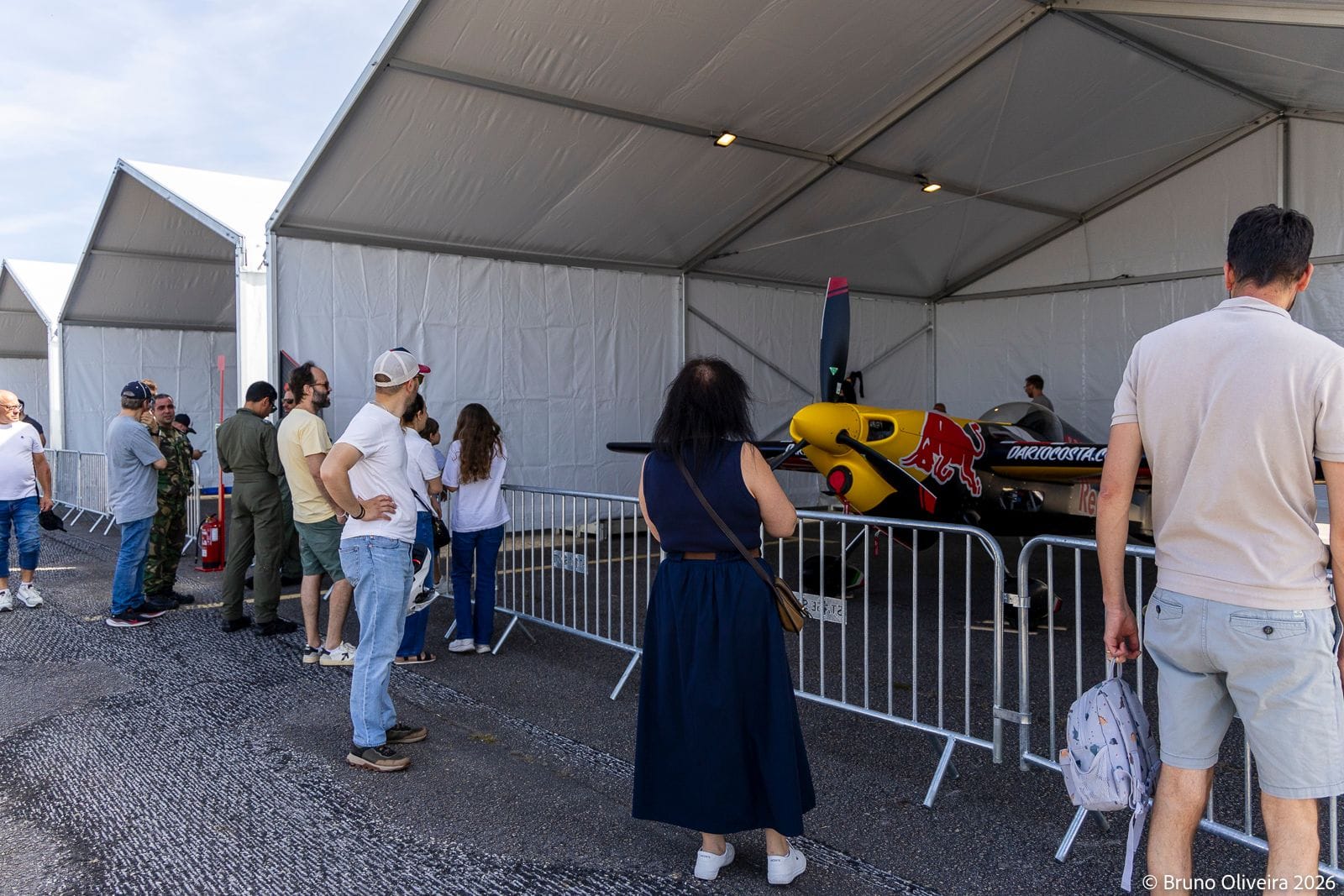
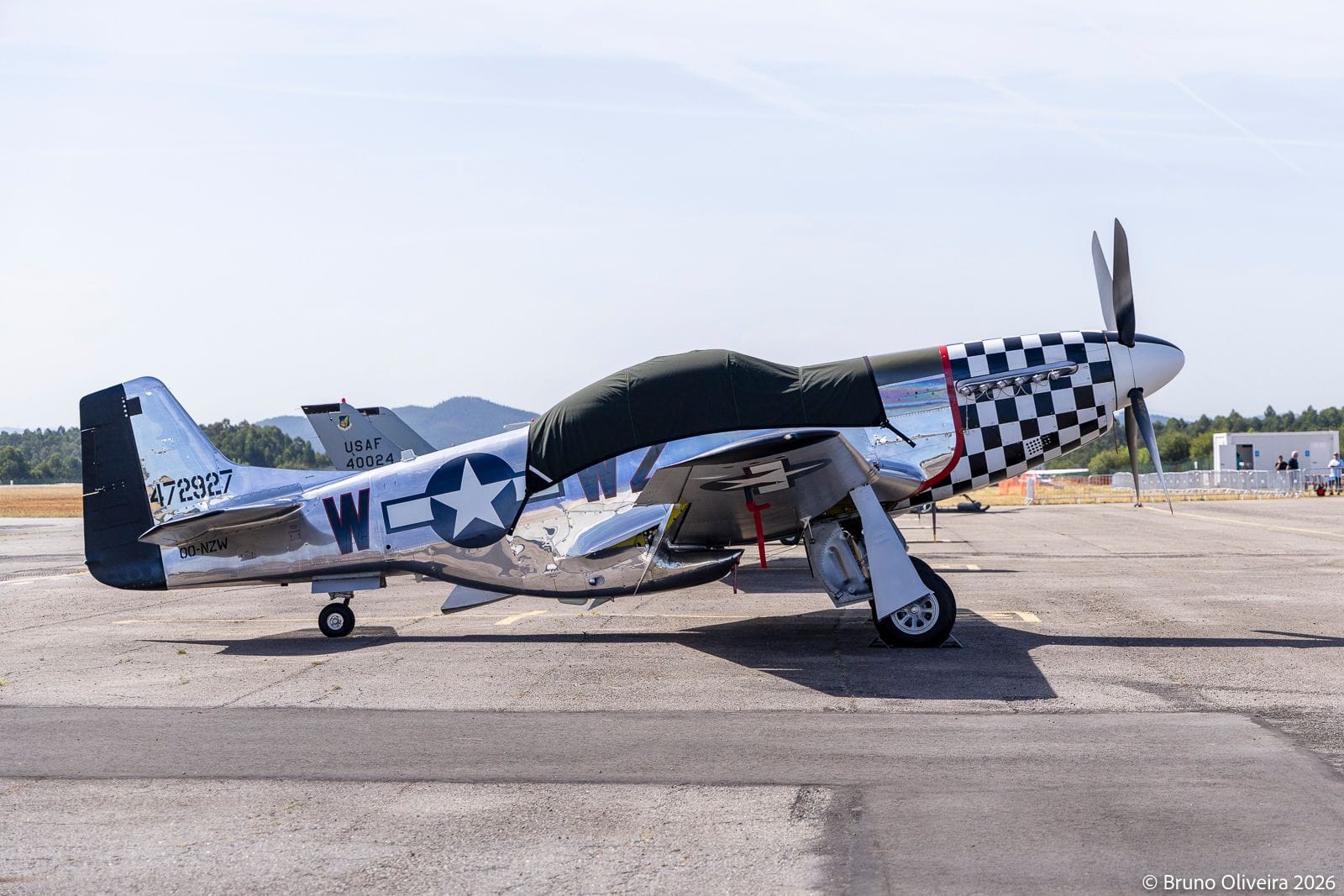
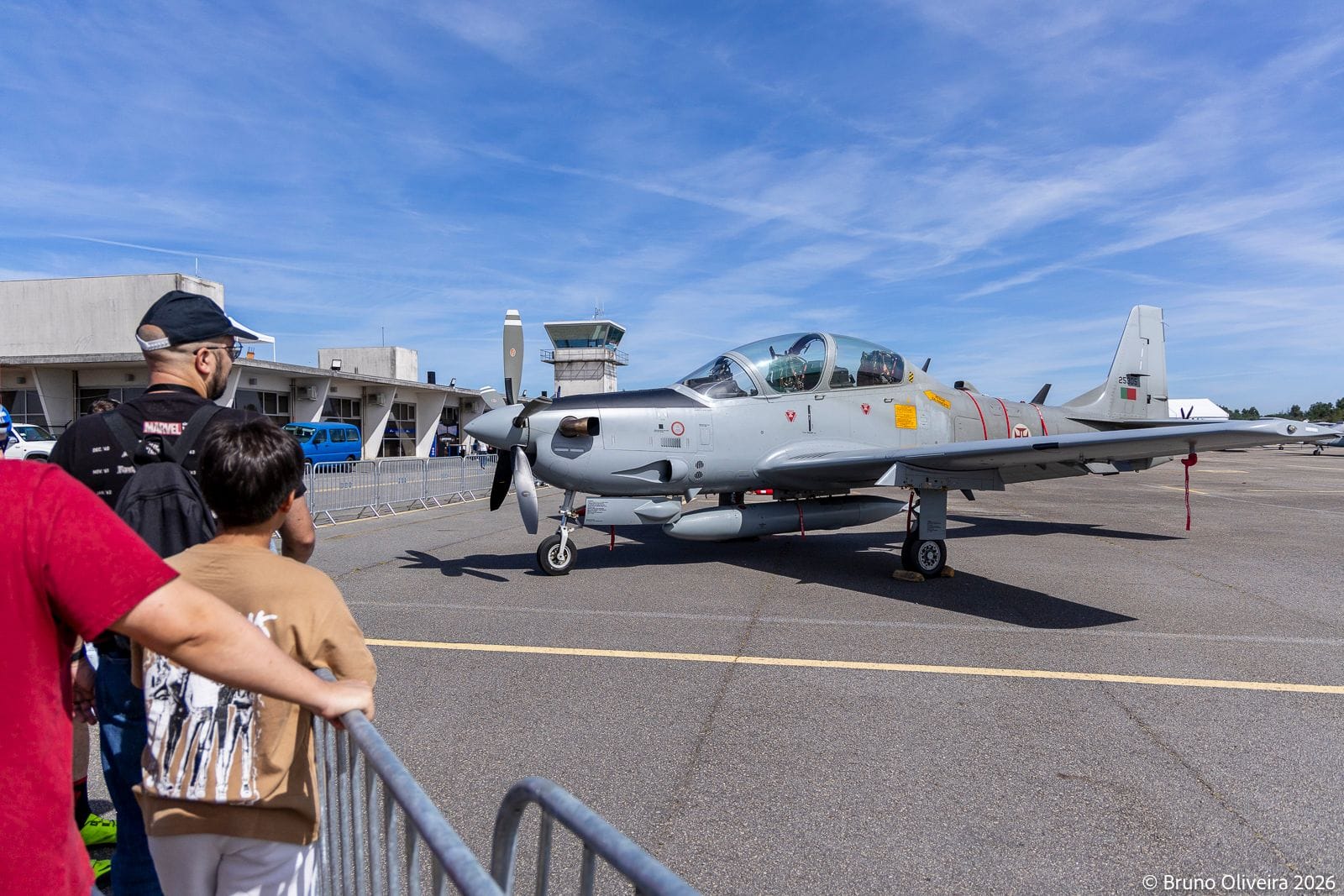
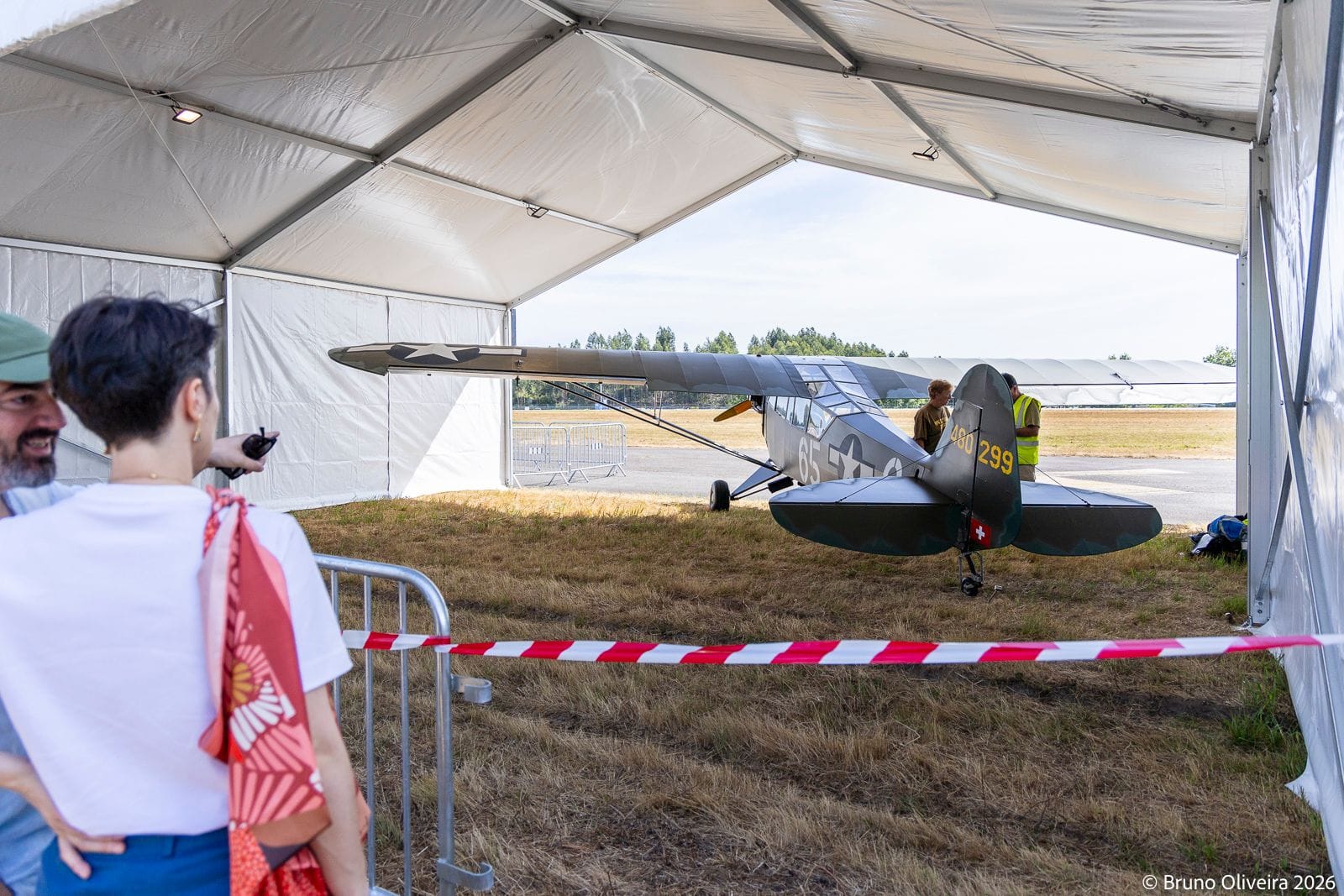
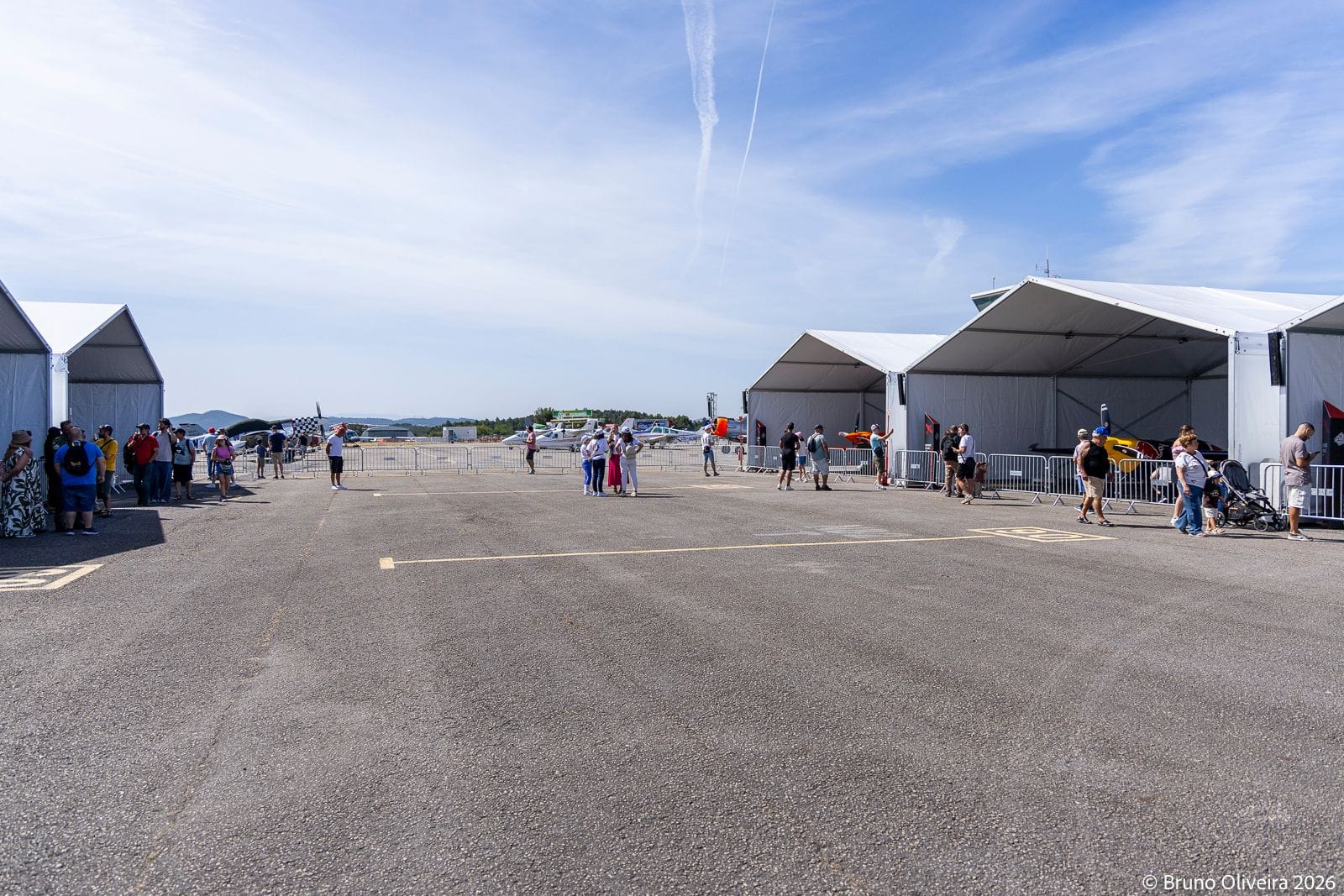
Maia Aerodrome: Competition aircraft, military planes, Warbirds and aerobatic machines turned the Municipal Aerodrome of Vilar de Luz into the Air Invictus centre on the ground. The exhibition gave visitors the chance to get close to the aircraft and meet pilots, while schools and families could take part in educational activities focused on aviation and aerospace.
The Maia experience was not limited to looking at aircraft. Model aircraft demonstrations reproduced, on a smaller scale, the precision and speed that would dominate the main programme. The Portuguese Air Force also offered flight experiences aboard a KC-390 to students from participating schools at Francisco Sá Carneiro Airport on Saturday.
The KC-390 would appear several times throughout the weekend, acting almost as a bridge between the event’s educational and technological dimension and its military spectacle.
At Praia do Titan, the festival took on the character of a large summer event. There was night-time model aviation, lighting effects and music, culminating in the Revenge of the 90’s show. The concept was deliberately accessible: rather than keeping aviation within a purely technical universe, Air Invictus sought to connect it with an audience accustomed to concerts, festivals and large outdoor events.
Revenge of the 90’s filled much of the evening with music from the 1990s and 2000s. The beach became a dance floor, creating a setting completely different from the aerodrome that had hosted visitors only a few hours earlier.
It was a change of language. In Maia, visitors could talk about aircraft. In Matosinhos, they could simply enjoy the show.
Then midnight arrived.
Attention turned to the sky above Praia do Titan. At midnight between 19 and 20 June, 3,097 drones flew simultaneously, in a choreographed display produced by Flock Drone Art. Lasting just over ten minutes, the show transformed the night sky into a giant luminous canvas. Astronauts, planets, stars and references to Porto and Portugal appeared above the crowd as spectators watched from the beach and seafront.
The original objective had been to surpass the previous mark of 3,050 drones. The final number went further, adding 47 aircraft to the record.
More important than the numerical difference was the official recognition on site. A Guinness World Records representative confirmed the achievement, recognising Flock Drone Art and Air Invictus. The display established a record for the largest phrase formed by drones and was also recognised as Europe's largest drone light show.
This was more than a picture of thousands of points of light in the sky. The choreography was designed to tell a story. It began with the universe and space exploration before moving towards recognisable references to the city and the country. At one point, the drones formed the image of an aircraft above the area where the racing machines would compete the following day.
The symbolism was clear: the festival that aimed to bring aircraft back to the Douro began by drawing the image of those aircraft in the sky through unmanned technology.
More than 50,000 people attended the first night at Praia do Titan, according to figures released after the show.
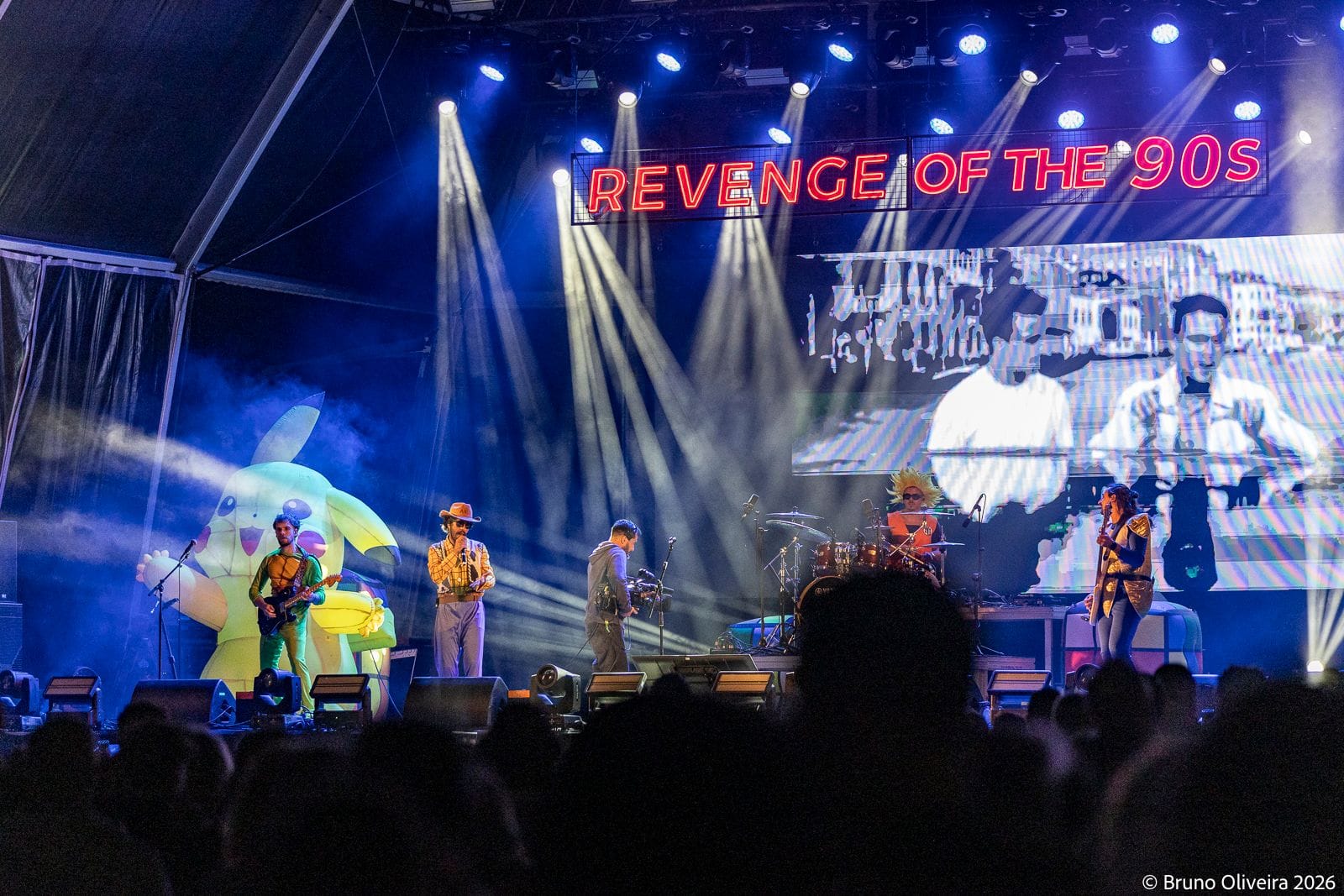
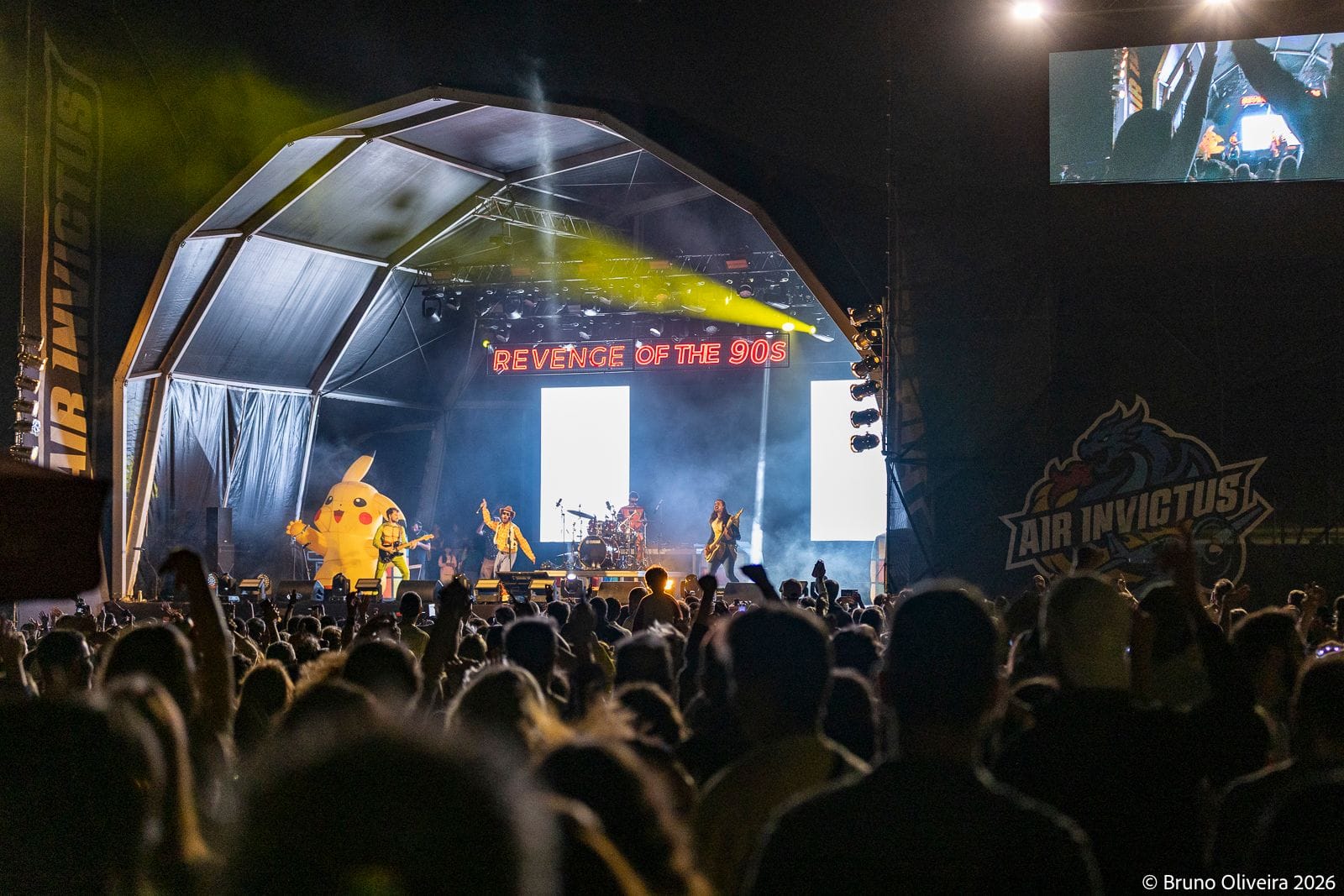
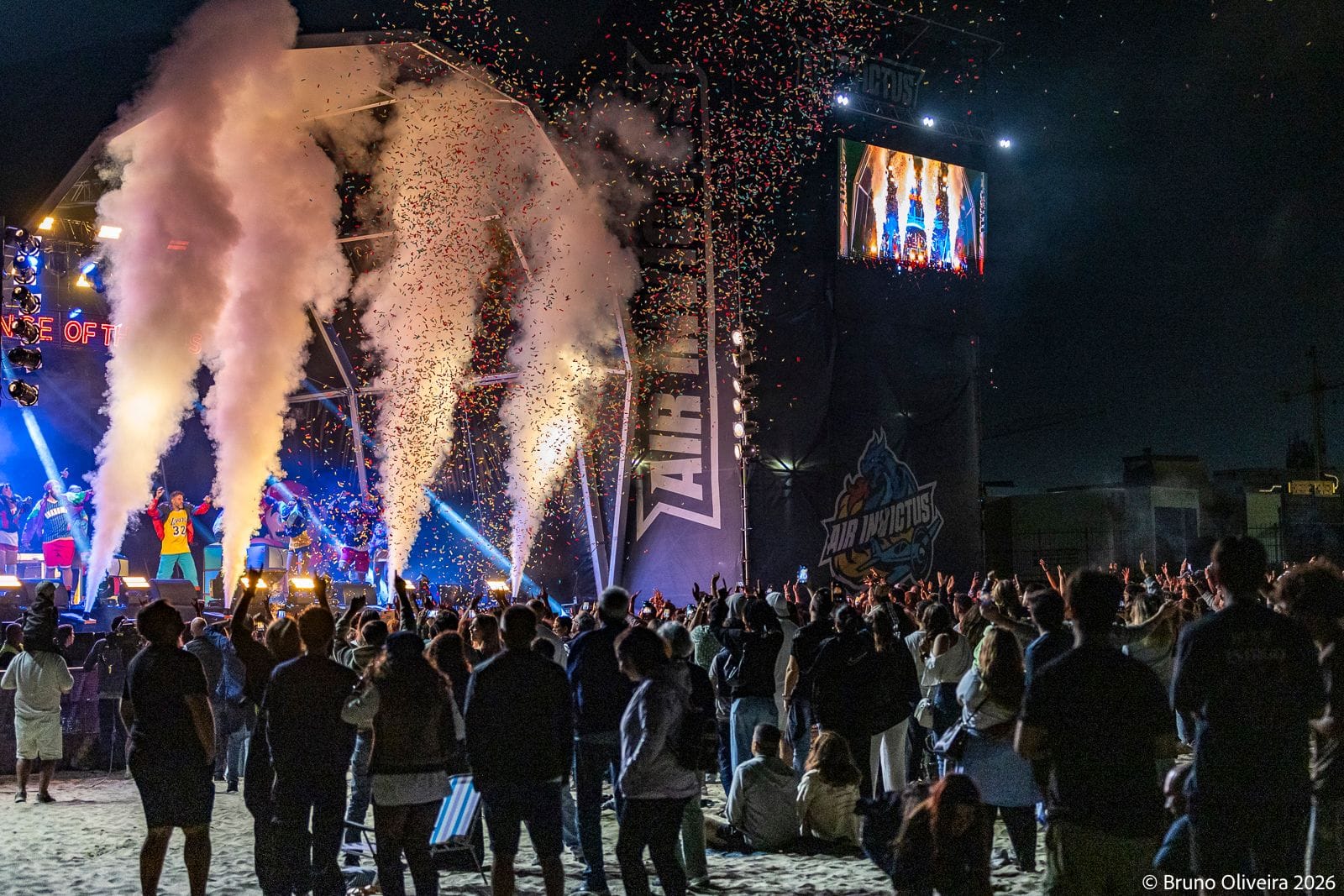
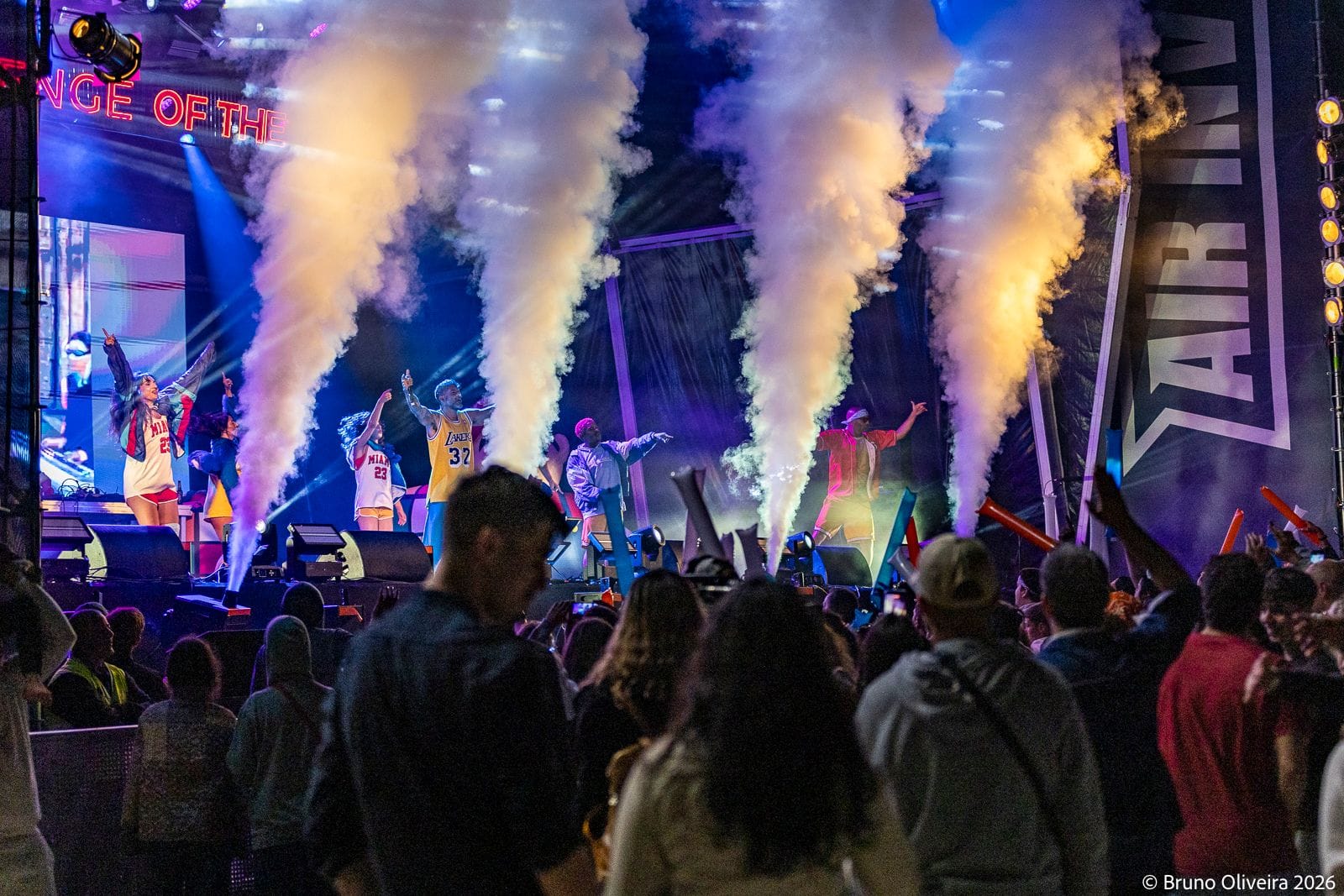
The first night of Air Invictus brought aviation into a different setting, combining with music from the 90’s.
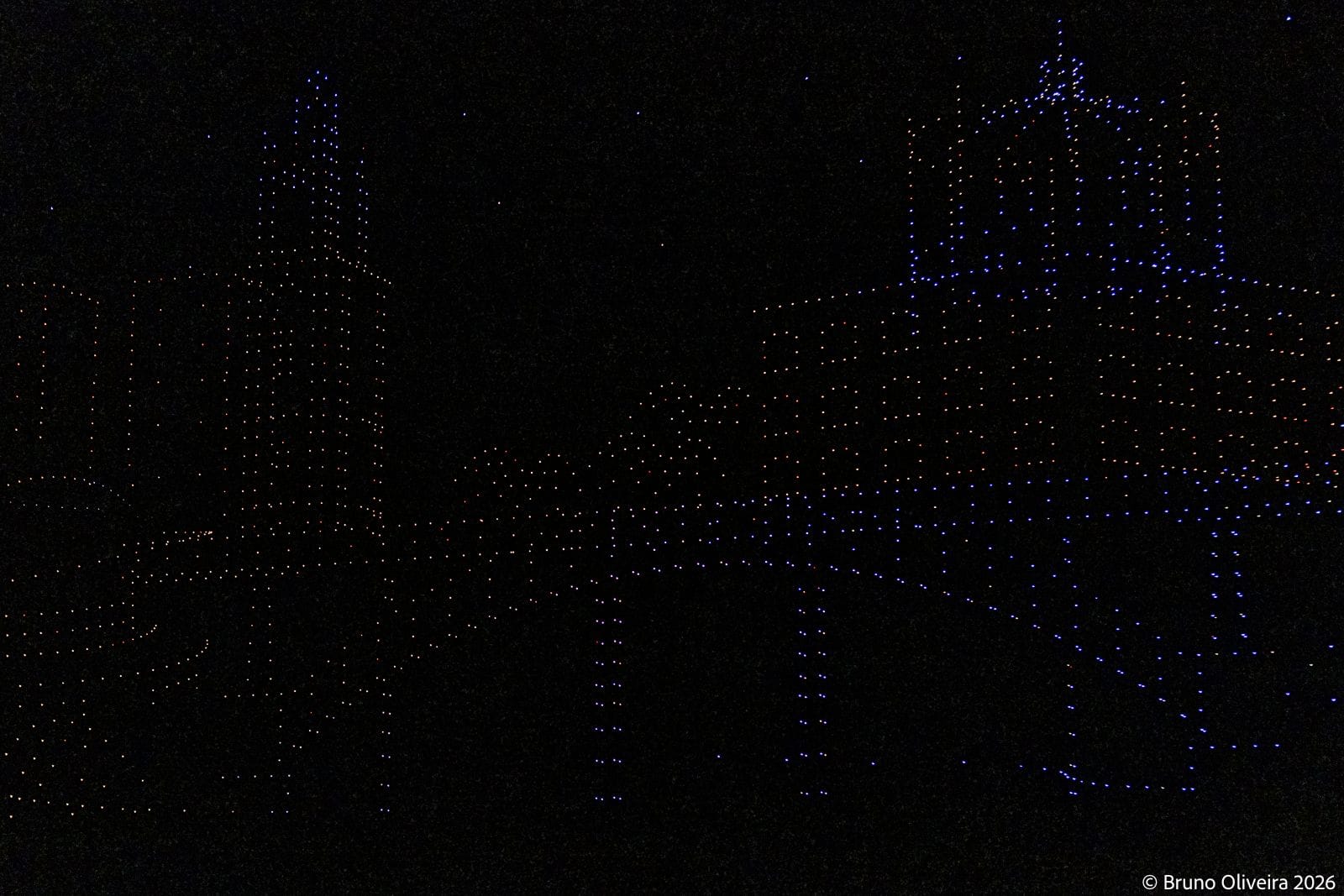
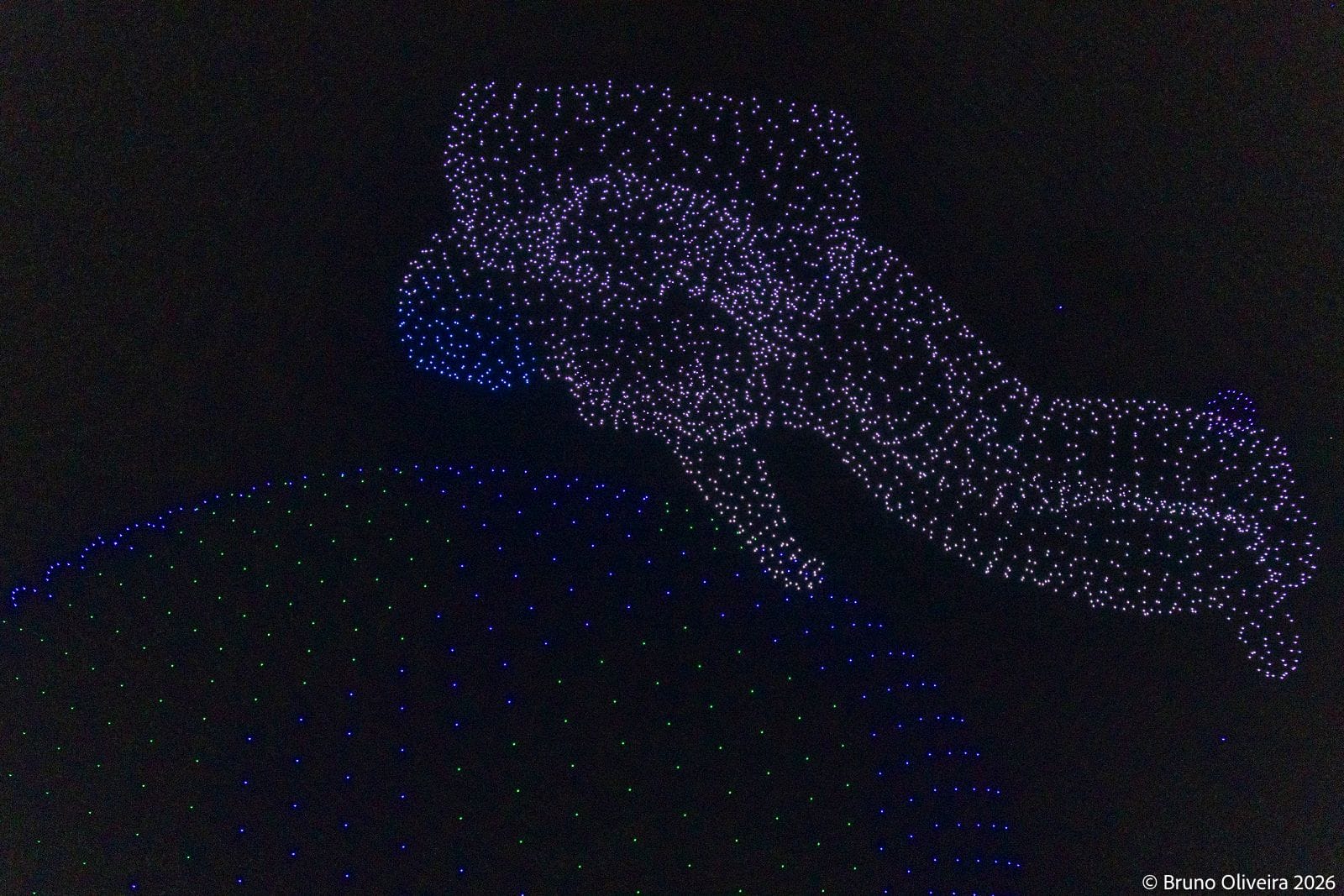
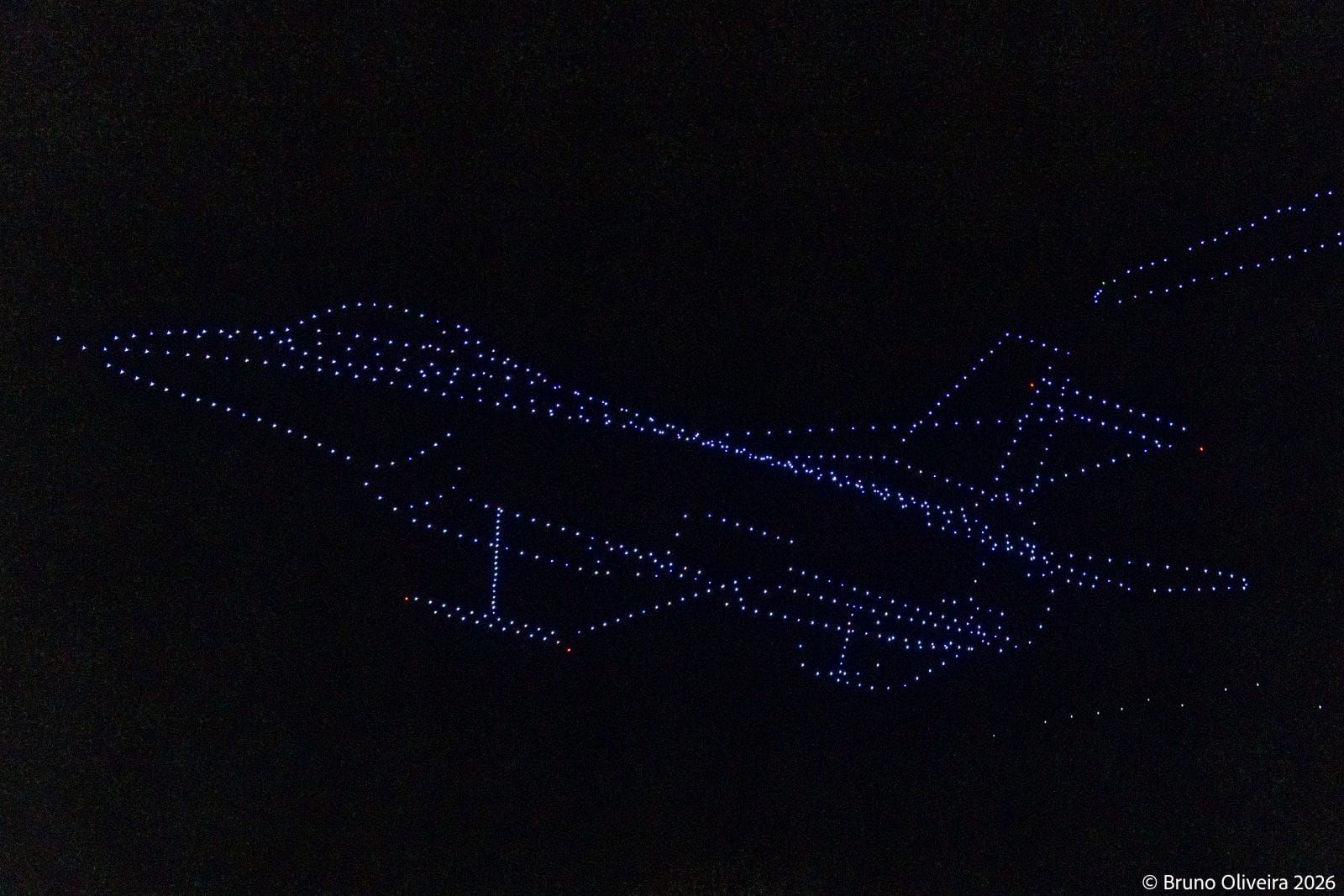
A display of 3,097 drones above Praia do Titan. The Guinness World Records-recognised choreography became one of the defining images of the festival.
The Matosinhos event ultimately captured the identity of Air Invictus: it was not simply an aviation festival. It was an event about what can happen when aerial technology leaves the confines of airports and enters public space.
On Saturday, the scale changed again.
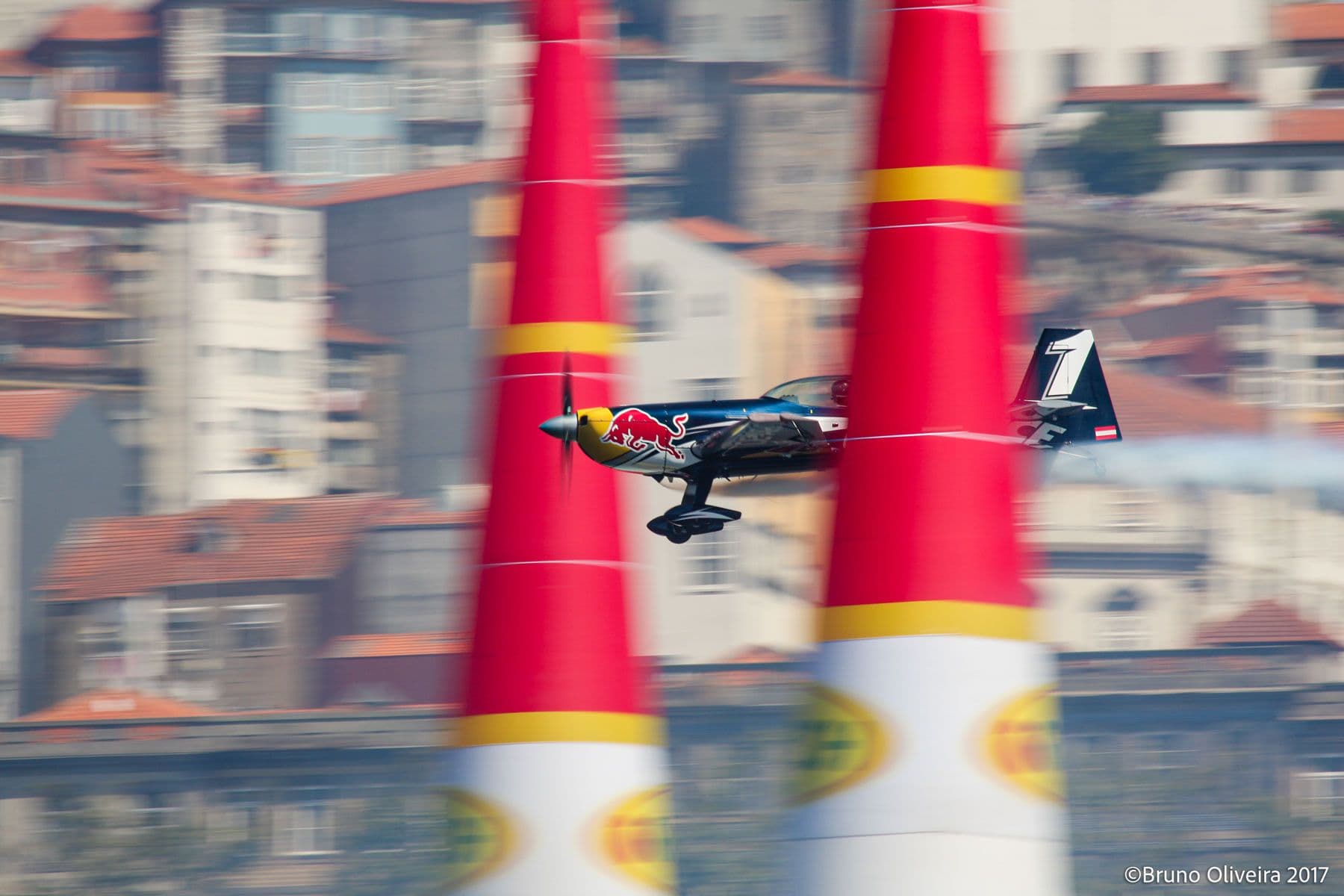
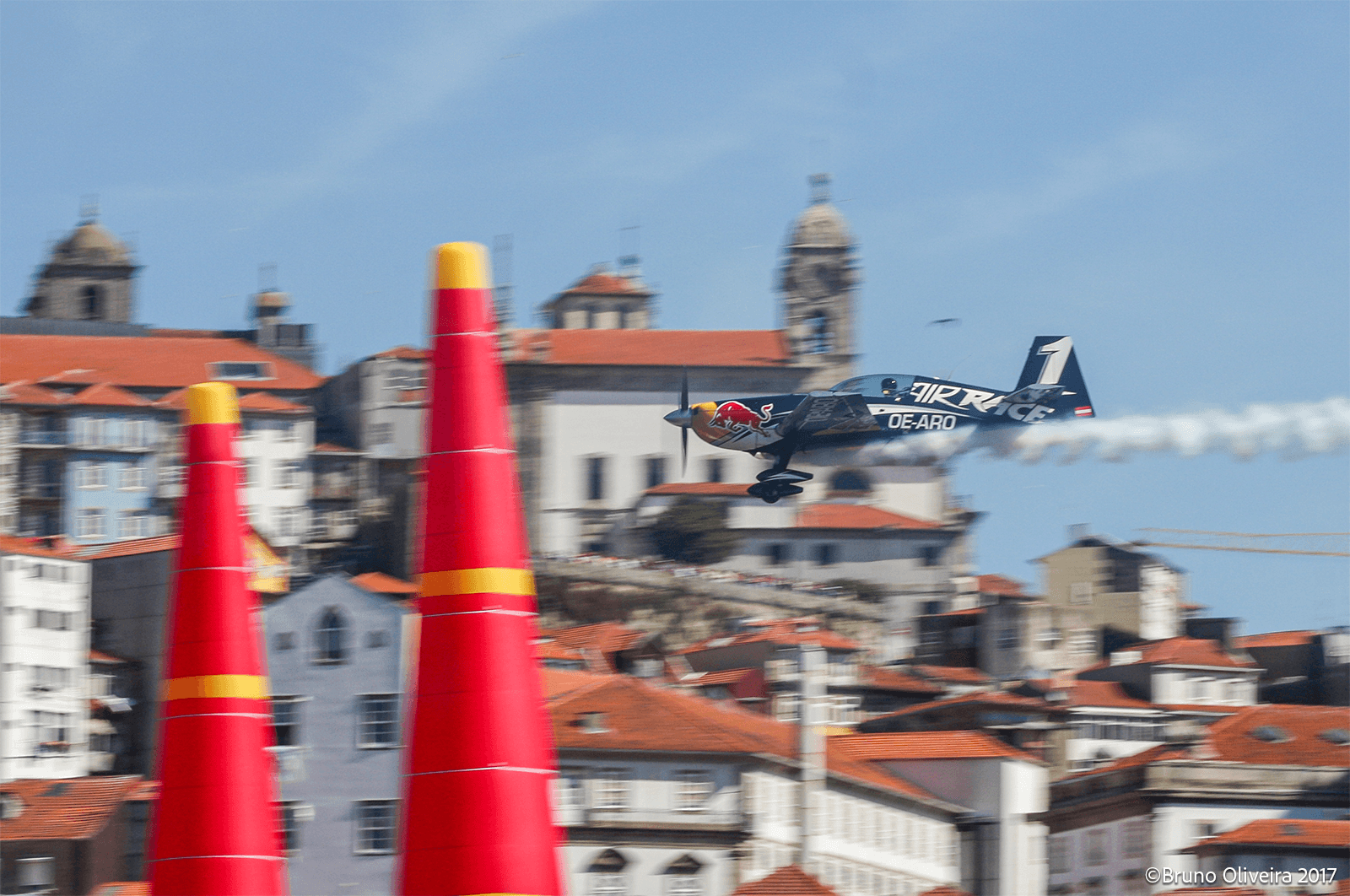
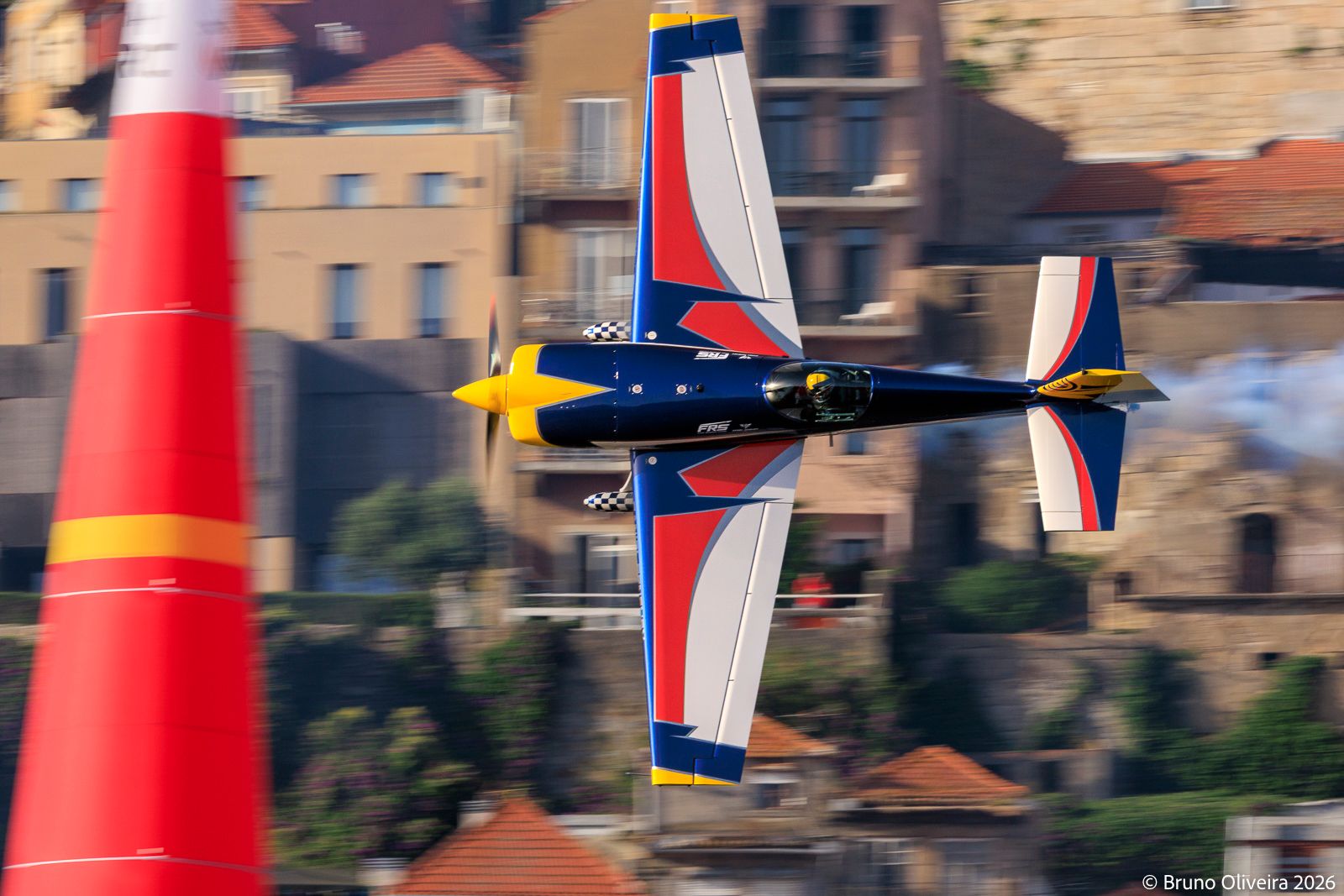
The Douro once again welcomed competition aircraft, nine years after the last Red Bull Air Race in Porto and Gaia in 2017. The familiar inflatable gates returned to the river, while the corridor between the Arrábida Bridge and Dom Luís I Bridge became a racetrack for aircraft built specifically for speed, precision and aerobatics.
The comparison with the Red Bull Air Race was inevitable, but Air Invictus presented the competition as part of a broader festival. Racing was only one element of the programme, interspersed with aerobatic displays, military flypasts and other aerial performances.
On Saturday, the pilots used the course primarily for reconnaissance and practice. Two sessions allowed them to understand the characteristics of the track, identify its most demanding sections and prepare for Sunday’s decisive competition. Even without a final result at stake, the speed of the aircraft was enough to draw a major crowd along both banks of the river.
The military presence added another dimension to the spectacle. Two Portuguese Air Force F-16s were among the most anticipated displays, alongside other military and historic aircraft. The Air Force’s participation also included the KC-390, C-295 and A-29N Super Tucano.
The result was a show of sharply contrasting rhythms. A racing aircraft would enter the course and disappear between the gates within seconds; moments later, a fighter jet would cross the sky at a completely different scale of speed and noise; then an aerobatic pilot would appear, turning an aircraft into something that seemed almost detached from the normal rules of flight.
On Sunday, the competition reached its decisive stage. Following Saturday’s practice sessions, qualifying established the starting order for the final race. The pilots returned to the corridor above the Douro, this time with every passage measured to the second and every mistake potentially capable of changing the standings.
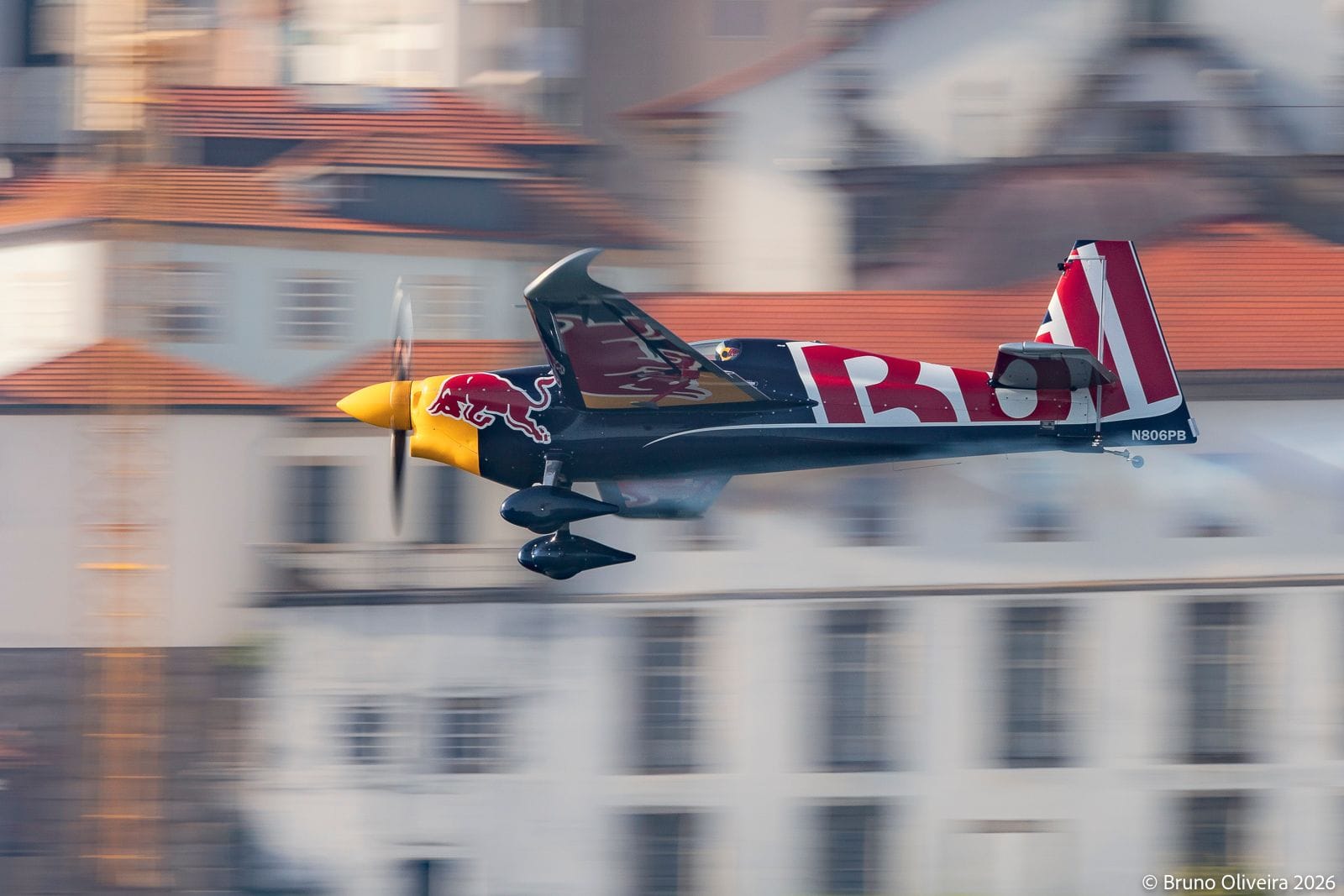
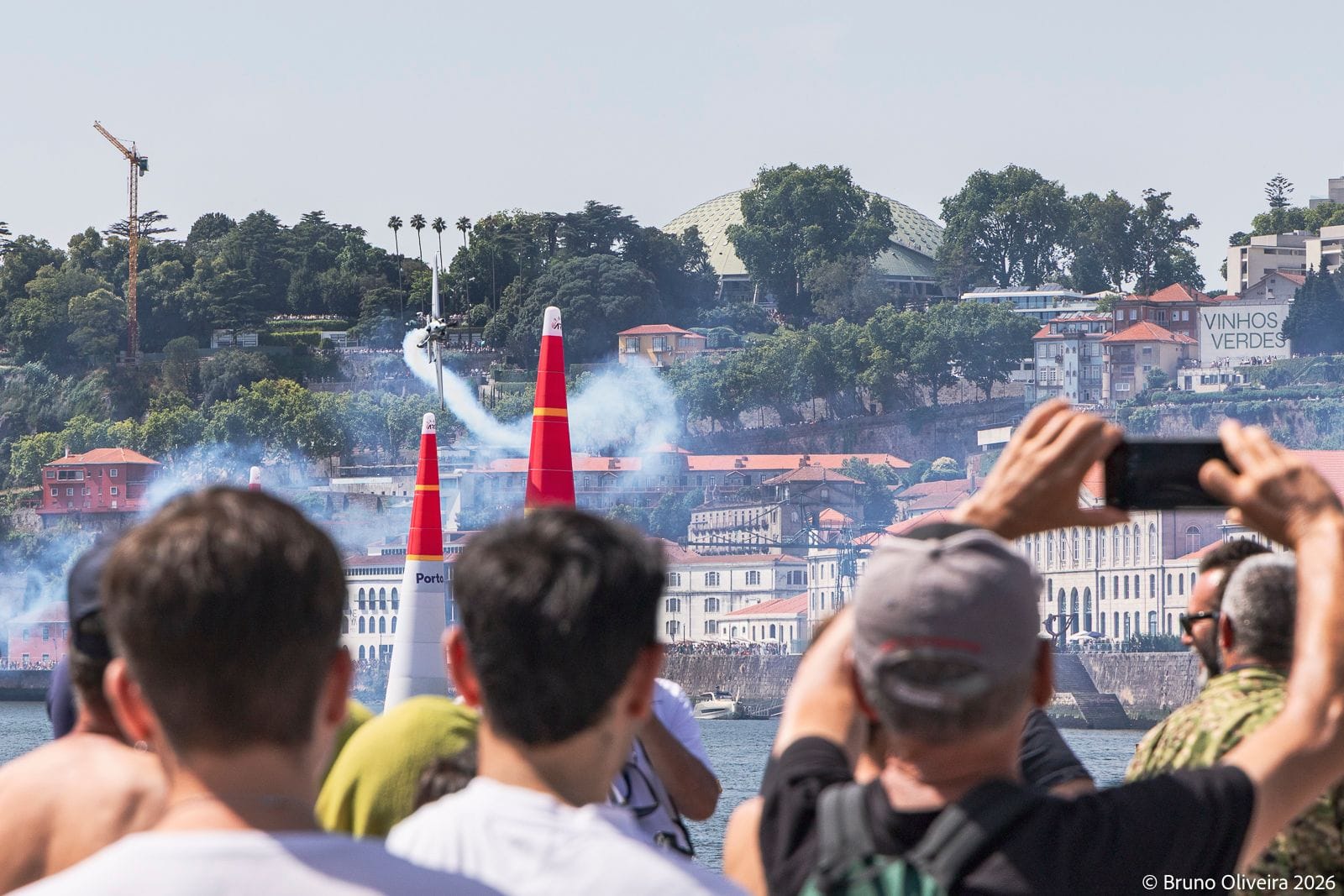
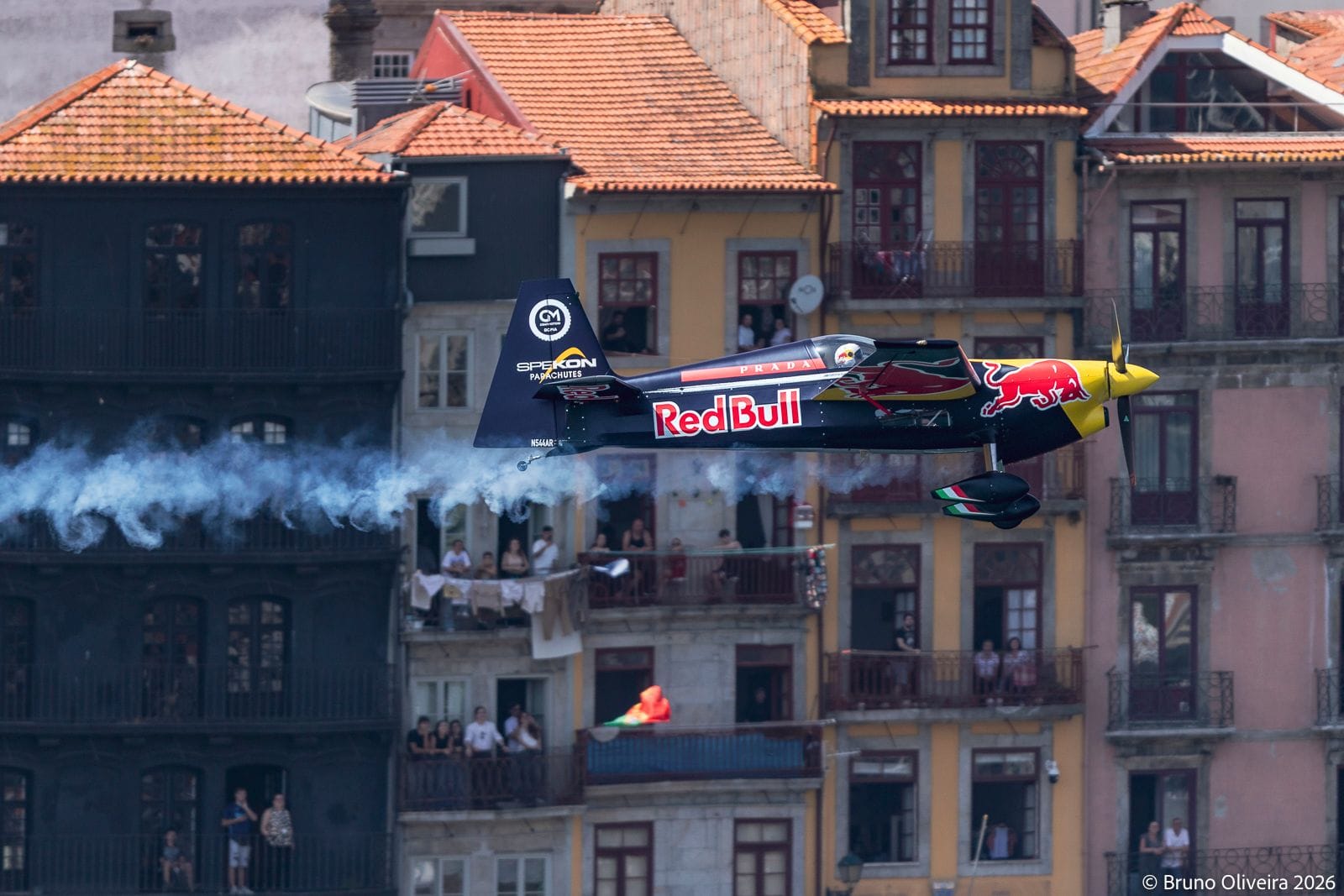
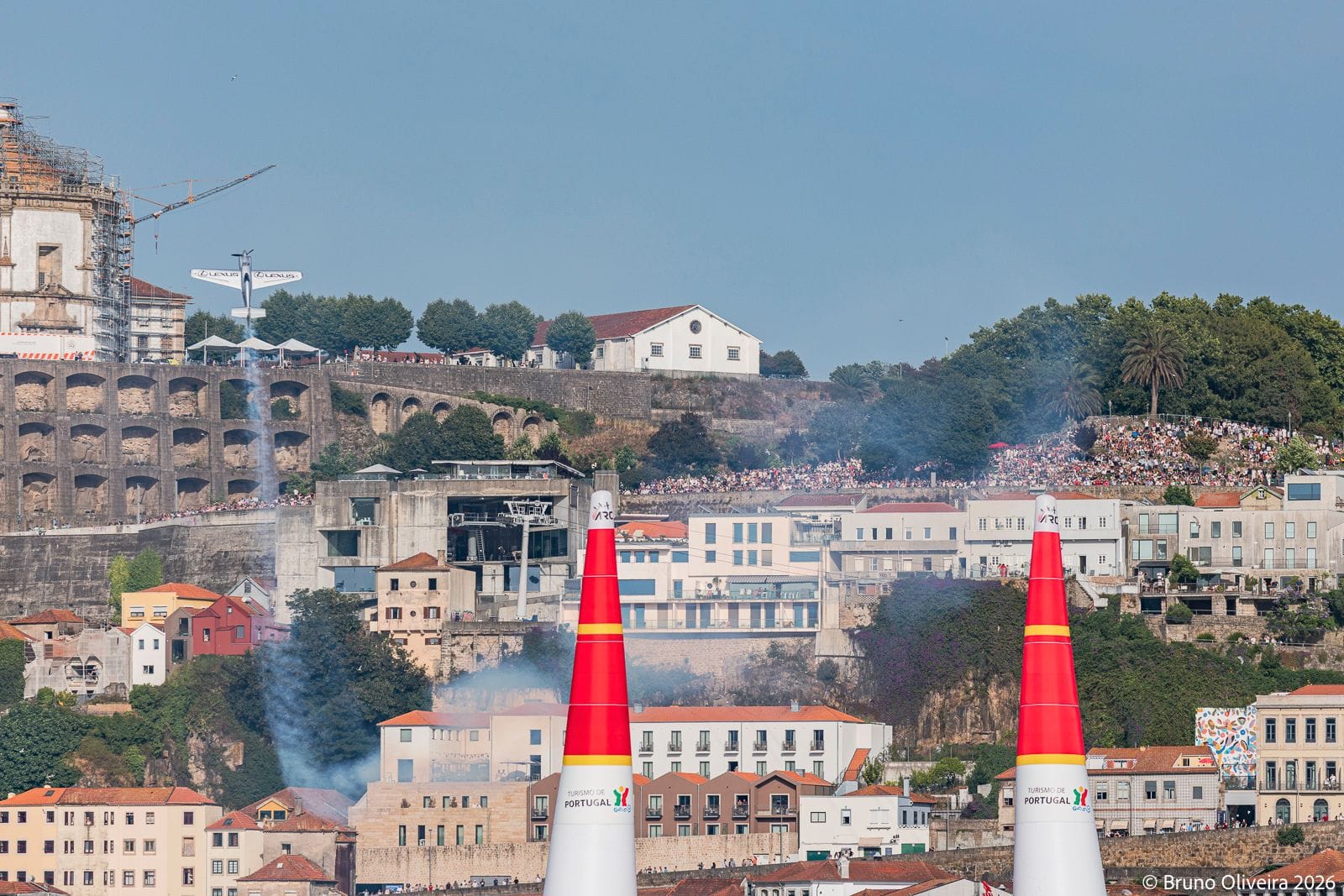
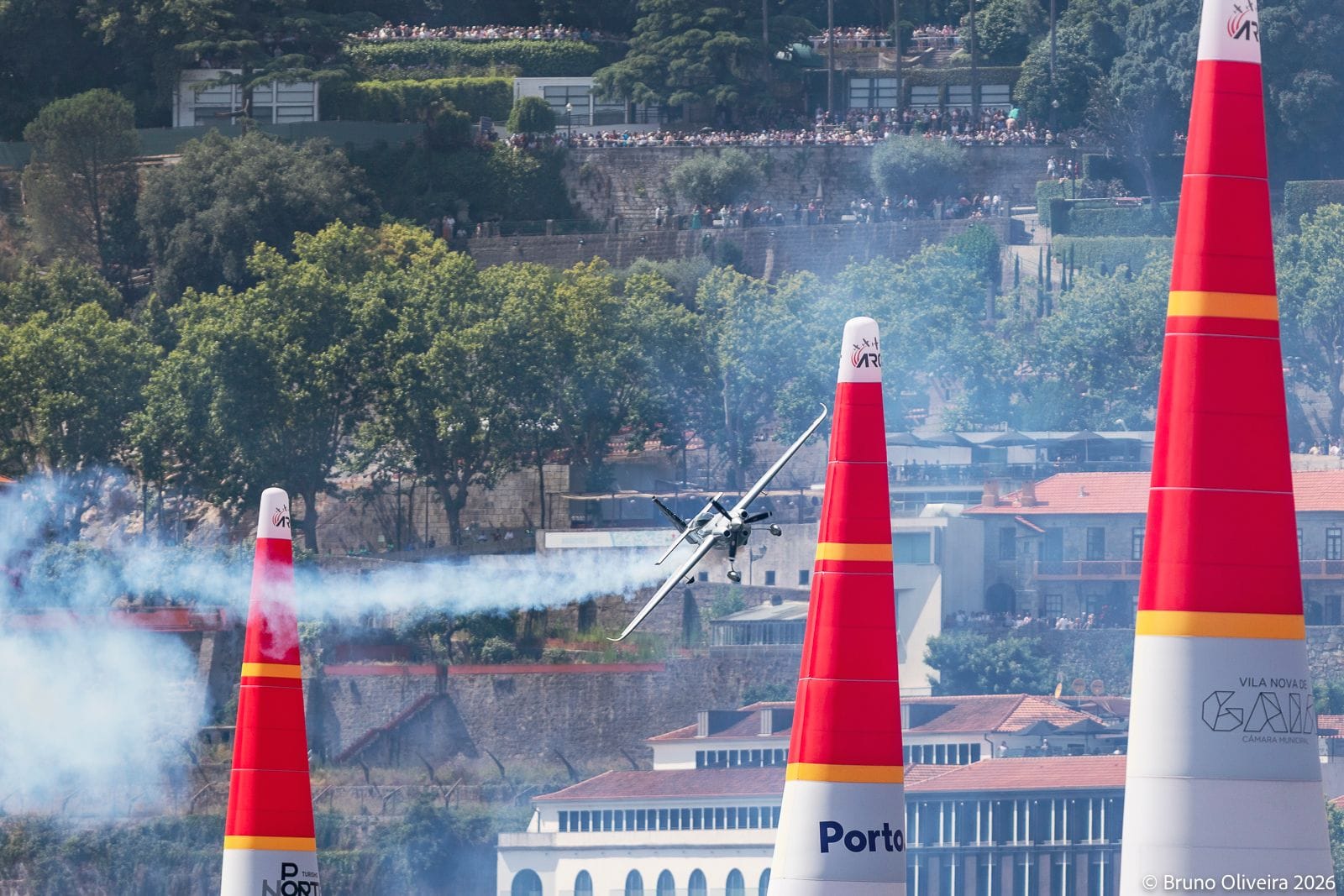
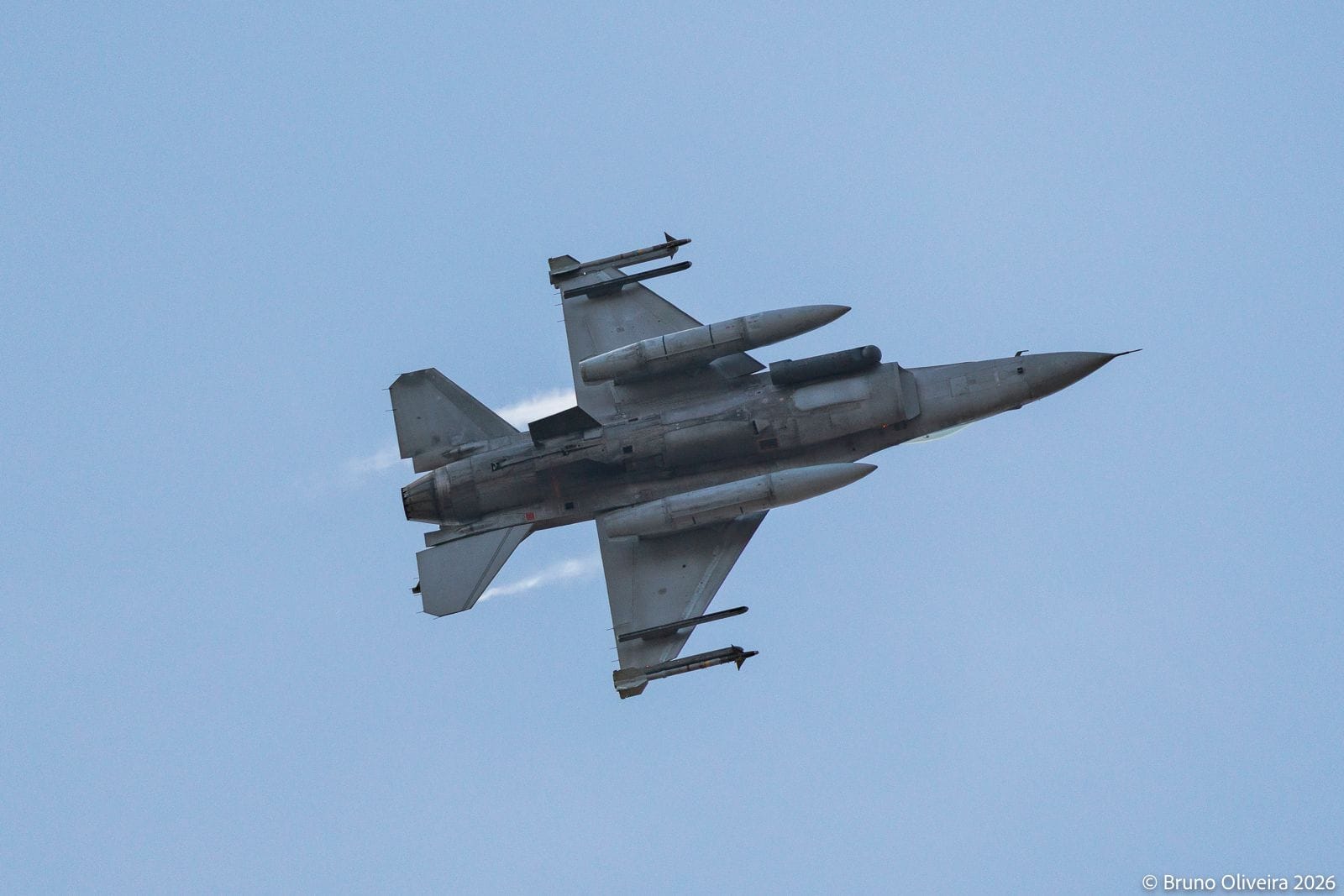
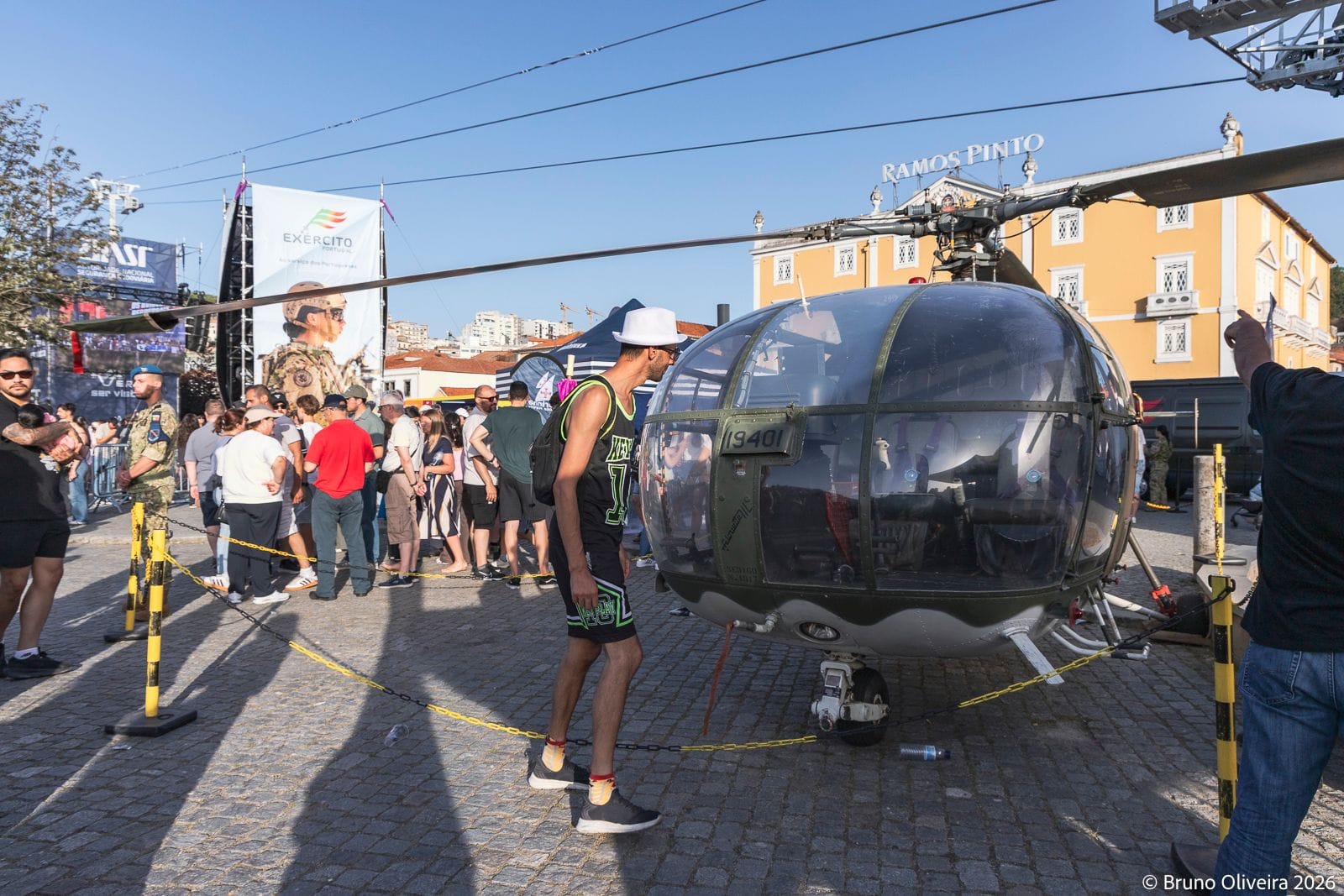
Nine years after the last Red Bull Air Race in Porto, competition aircraft returned to the Douro. Between the Arrábida Bridge and Dom Luís I Bridge, pilots took part in practice and racing in front of thousands of spectators, alongside aerobatic displays and military flypasts, including Portuguese Air Force F-16s.
In the end, Czech pilot Petr Kopfstein took victory, finishing ahead of one of the names most familiar to the local audience: Martin Šonka, winner of the last Red Bull Air Race event held on the Douro in 2017.
Šonka finished second, followed by Spain’s Juan Velarde, a two-time aerobatic champion. Italy’s Dario Costa, known for several world records and one of the most prominent names on the Air Invictus line-up, finished fourth. François Le Vot, Nicolas Ivanoff and Daniel Genevey completed the field.
Kopfstein’s victory was not decided by a narrow margin. The Czech pilot recorded a final time of 1:13.466, more than three seconds ahead of Šonka, who finished in 1:16.609. Velarde recorded 1:19.028, while Costa finished in 1:20.164.
The audience had witnessed more than the race itself. Before and after the competitive runs, the programme included aerobatic displays and military flypasts.
There, with the racing engines finally silent, the top three pilots gathered once again. Petr Kopfstein, Martin Šonka, Juan Velarde and the rest of the pilots stepped onto the podium at Cais de Gaia, bringing two days of Air Racing over the Douro to a close and completing the first edition of Air Invictus with an image not seen in the region since 2017: competition aircraft racing against the clock between Porto and Gaia.
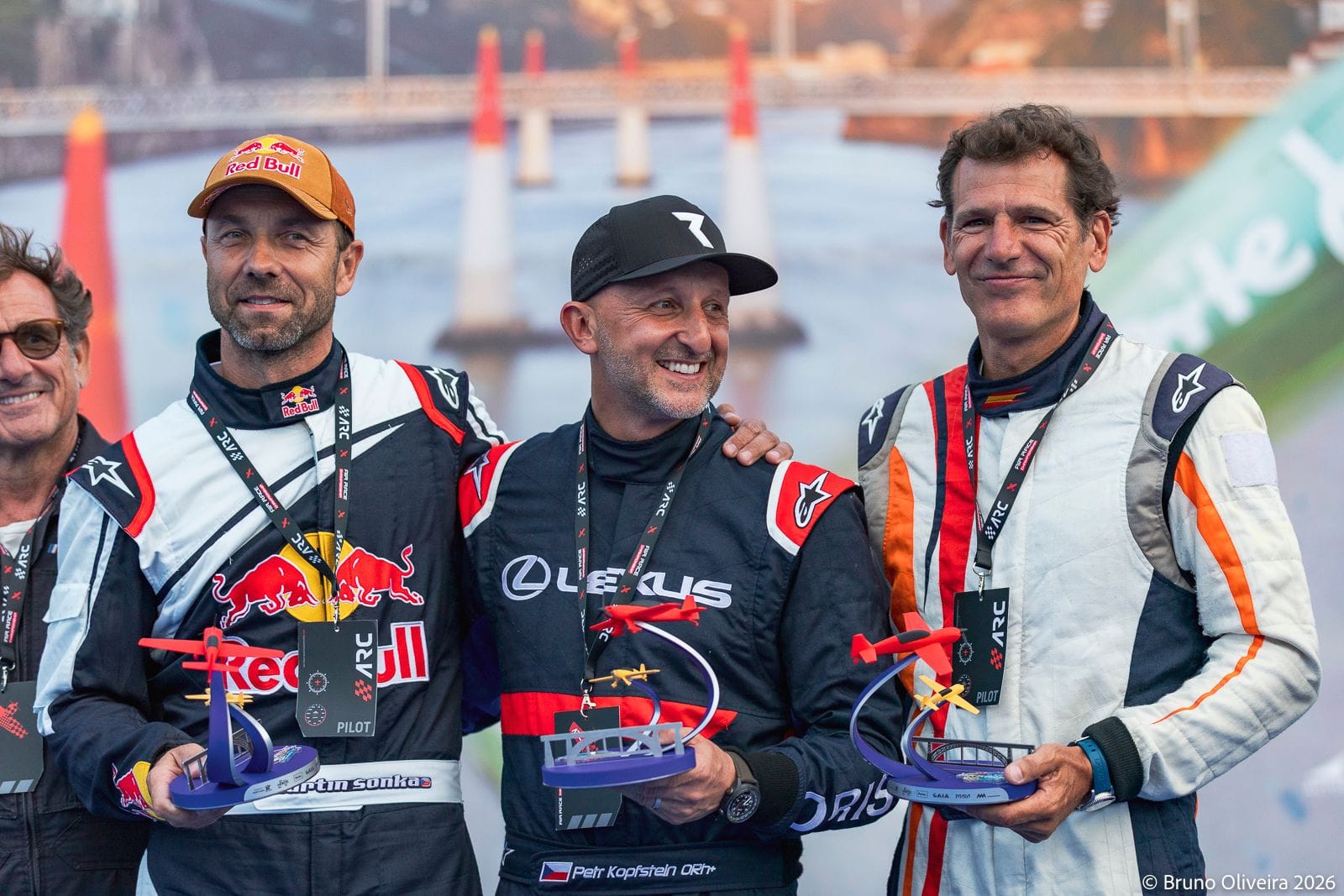
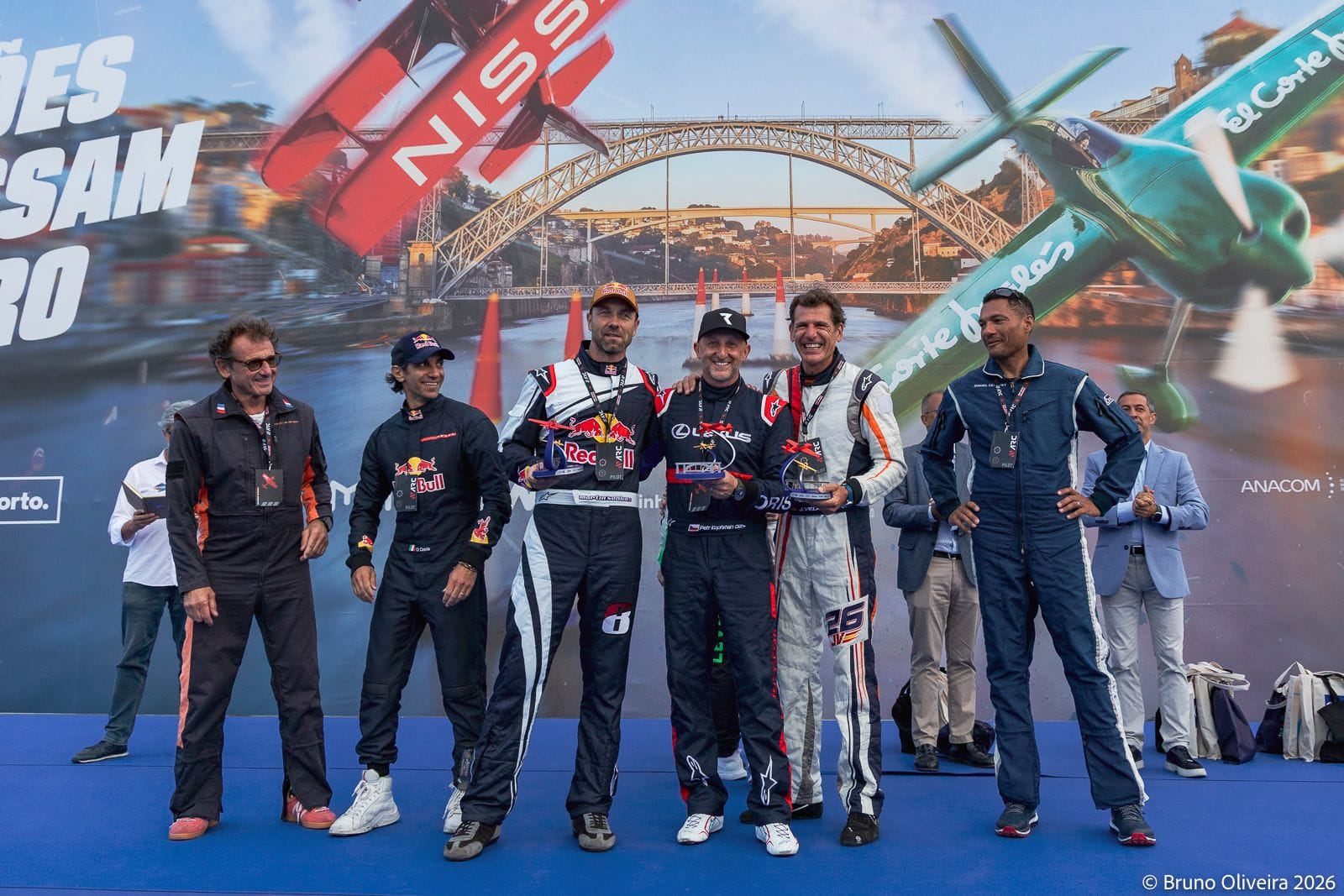
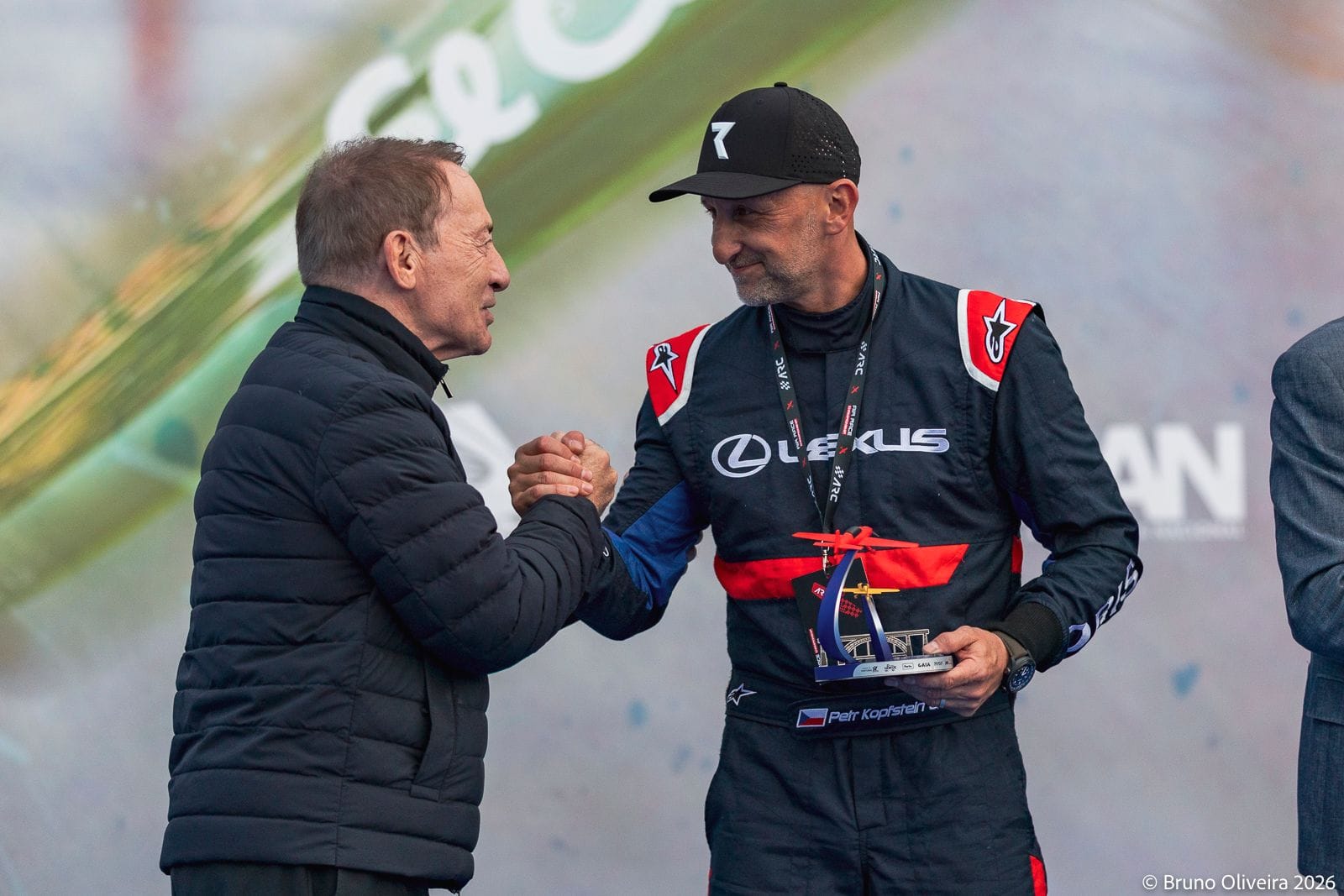
Petr Kopfstein took the top step of the podium at Cais de Gaia, joined by Martin Šonka and Juan Velarde along with their competitors who were cleary a whole racing family.
All rights reserved by PortoBestCity. Any copying, reproduction, editing, or reuse of the photographs and images from this coverage, including on social media or other websites, is strictly prohibited without prior written permission.